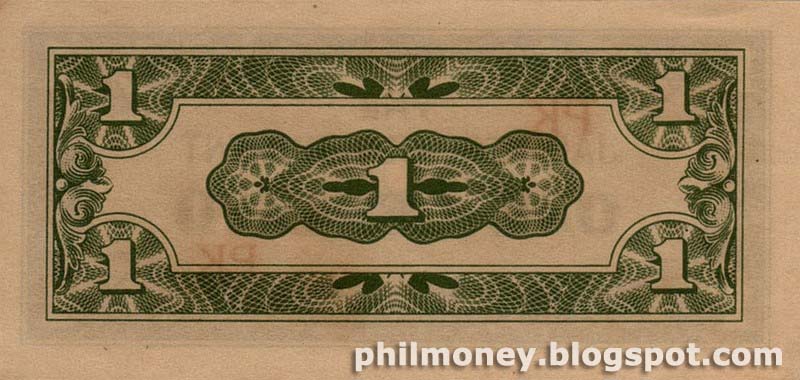
One Centavo Bill - Japanese Occupation


One centavo banknote issued in the Philippines during the Japanese occupation

5 Peso Banknote - Philippine National Bank Circulating Note

Five Peso Bill, series of 1916
Philippine National Bank Circulating Note

Obverse: William McKinley, seal of the Philippine National Bank
Reverse: Philippine National Bank Circulating Note

Text
Obverse: Issued under the provisions of act numbered 2612 of the Philippine Legislature, the Philippine National Bank will pay to the bearer on demand Five Pesos in lawful currency of the Philippine Islands. Series of 1916.

Reverse: This note is receivable by the Philippine Government in payment of all taxes, dues, or other claims due or owing to said governemnt and is exempt from all taxes.

Fifty Peso Banknote (1920) - American Series


Fifty Peso Banknote (1920 series) issued in the Philippines by the American Government

The front features Maj. Gen. Henry W. Lawton. An overprint on top of the PNB seal reads "Manila, P.H., May 2, 1916". The reverse features the seal of the Philippine National Bank.

Text reads: "Philippine National Bank Circulating Note"; "The Philippine National Bank will pay the bearer on demand Fifty Pesos in lawful currency of the Philippine Islands"

This post is sponsored by Manila Accomodation

What not to do in Coin Collecting

Before you do anything to your coins, check these guidelines to make sure you don’t reduce the value of your collection. Of course I need not elaborate that you shouldn’t drop your coins, scratch them, turn the coins into a necklace, and stuff like that.


1. NEVER touch the surface!

Hold coins by their edges only. Aside from gold and platinum, virtually all metals form chemical reactions. Our skin contains acids and many other chemicals which will be a disaster if they come in contact with your beloved coins. Try touching the surface of some common copper coins you can afford to lose. Almost immediately, you will see your fingerprints on the surface.

2. NEVER clean a coin.

Polishing coins may make them look shiny but don’t! Cleaning coins, however careful, will surely leave damage to it. Minute details are likely to be lost and scratches will be all over the coin. Coin collectors prefer to have coins with their natural surface.


3. Don’t store your coins with other coins.

It’s always better to store them separately. Keeping coins in one container can cause them to scratch each other. Also, coins of different metals may react with one another.


3. Don’t store coins in PVC plastic.

Chemicals present in some coin holders can leave residues on the surface which can cause damage in the long run. These coin holders are alright to use for only a short period of time. For long term storage, look for plastics with no PVC. Mylar is considered non-reactive so you’re better off with that.


4. Don’t store coins in a damp environment.

Really serious coin collectors store their coins in controlled environments. If you don’t want to bother with dehumidifiers, you can place small packs of silica gel or other desiccants together with your coins. Take note of this especially if you live in a humid environment.

1 Peso Bill - American Series


One Peso Banknote from the American Series

Obverse: portrait of Apolinario Mabini, seal of the Philippine-American Commonwealth with overprint: "Manila, Philippines"
Reverse: "One Philippine Peso"

Text reads: "By authority of an act of the Philippine Legislature, approved by the President of the United States June 13, 1922; This certifies that there has been deposited in the treasury of the; Philippines; One Peso; Payable to the bearer on demand; in silver pesos or in legal tender currency of the United States of equivalent value." Series of 1936, Treasury Certificate